

Updated November 23, 2026
By Mike Burgoyne, Mexico Real Estate Solutions
“Mike, we’re paying cash for this condo. Can we still get it inspected?”
Yes. I’d ask for an independent inspection and agree on the timing with the seller while we’re putting the offer together. Paying cash just means there’s no lender involved. You’re still the one who’ll own the place the next time it rains.
What I’d ask on the second showing
Say we’re standing in a top-floor condo in Akumal. You like the light, the terrace is big enough for dinner with friends, and there’s a faint stain above the patio doors. My first question for the seller would be, “When did you last see water here, and what was done about it?”
If the answer is that the roof was resealed last summer, let’s ask for the work order and find out who did it. I’d also show the inspector the stain. That gives them something specific to investigate and gives you more to go on than fresh paint or an old photo.
You’ll see plenty of concrete and block construction here. On a walkthrough, I’d still open the wood cabinets under the sinks, look at the frames around the terrace doors and ask when the air conditioners were last serviced. An inspector can look more closely, tell you what they could access and flag anything that calls for a specialist.
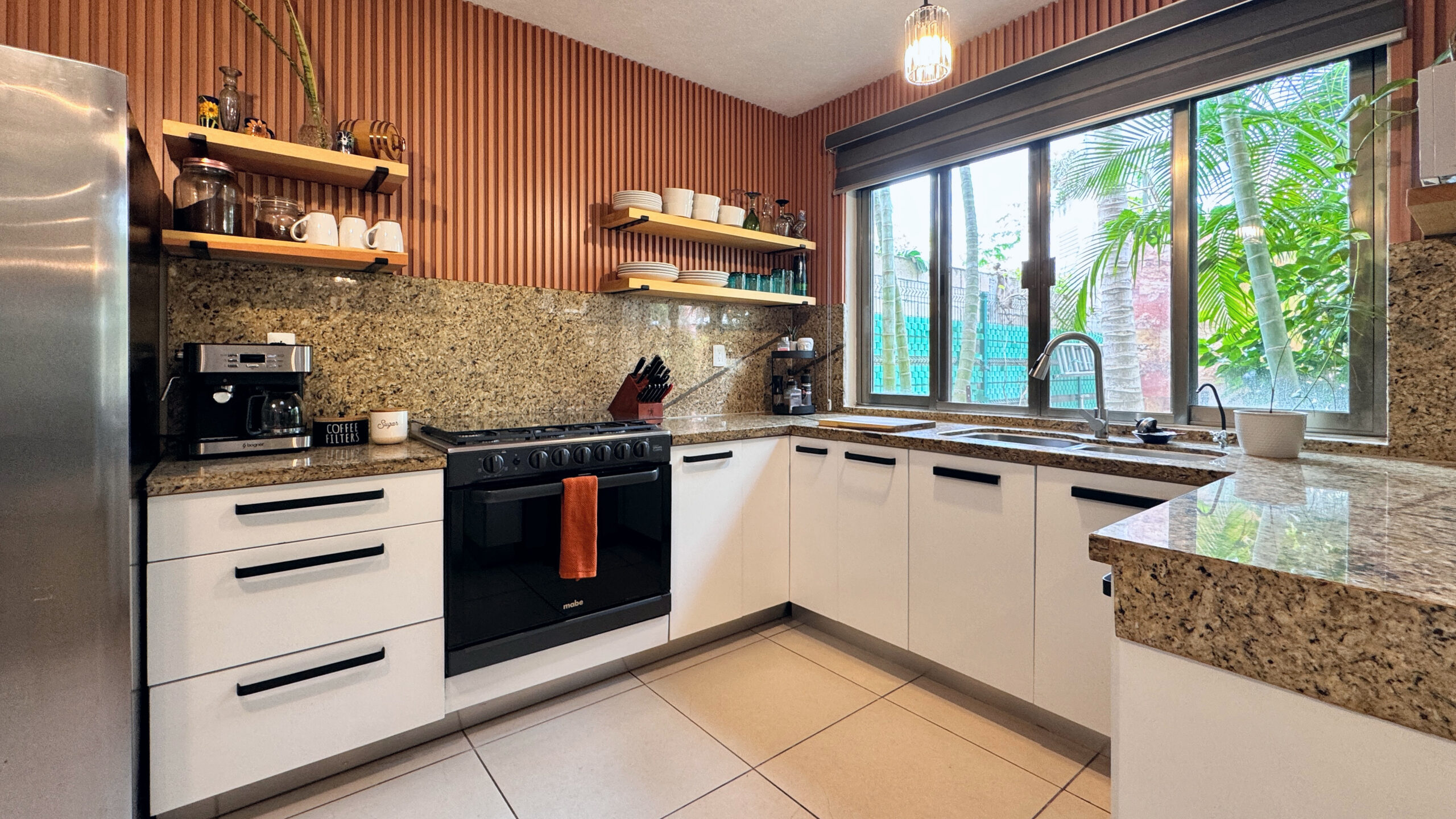
What’s normal, and what should concern you?
An absent seller asked us to promote and sell their condo. They weren’t here to see the day-to-day condition of the home, and before we’d list it with confidence, it needed some attention. Here’s what we found: a stain on the ceiling, a hairline crack running above a door, and another in the wall beside an air conditioner, with rust on the unit.
Owners who live away from a property often don’t know its current condition as well as they think they do. That’s why we look carefully before we list. It’s also why I’d still want you to get an inspection when you’re the one buying, even if the home has already been through our eyes.
On a walkthrough, the question is not whether a home is perfect. It’s which marks are ordinary in this climate, and which ones I’d want looked at more closely.
Ceiling stains
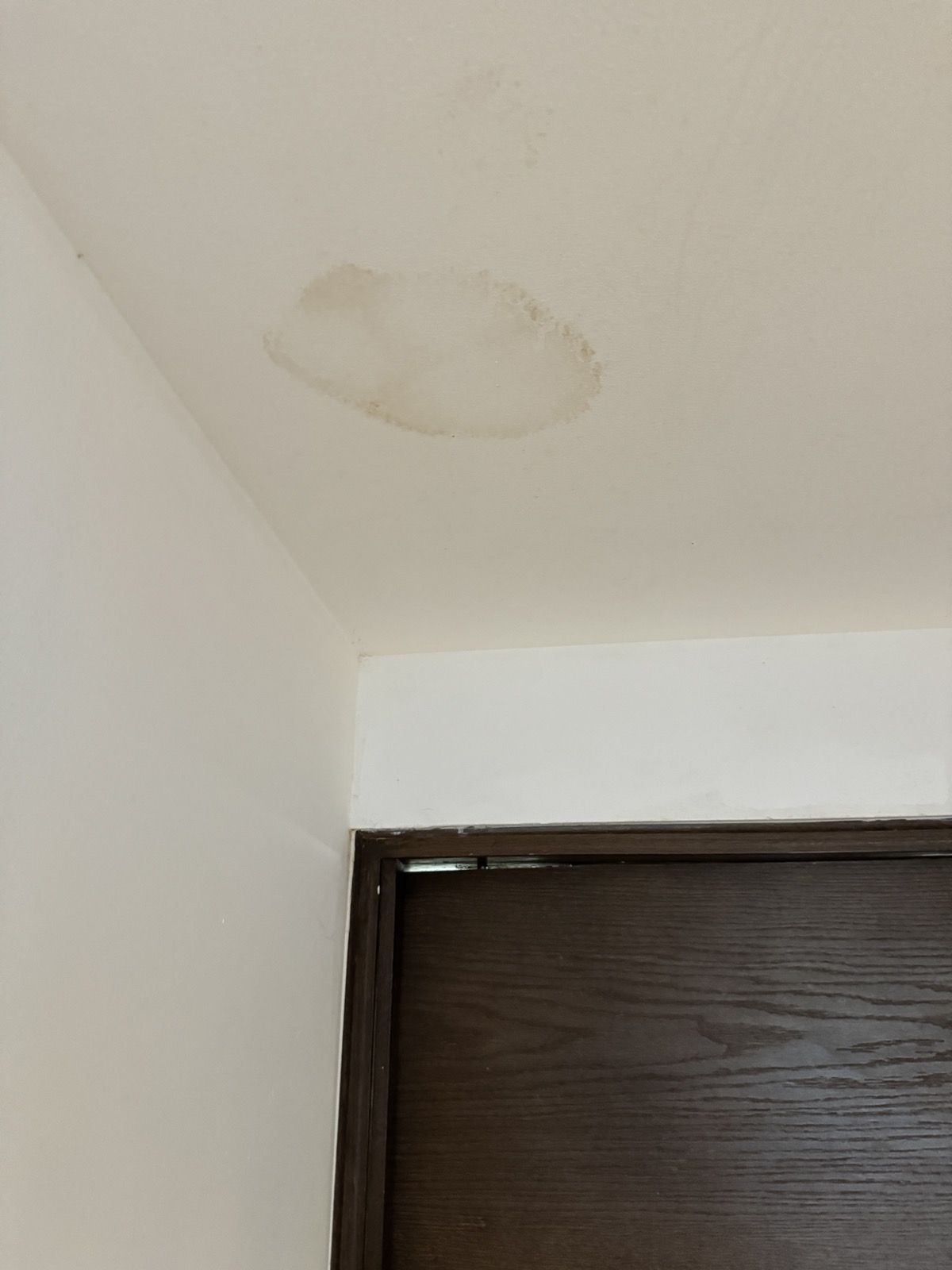
A stain on the ceiling is always worth a question, even if it looks old and dry. An old, dried stain can be leftover from a leak that was already repaired. What should concern you more is a stain that still feels soft or damp, one that is spreading, or one that has a fresh, musty smell. A photo can’t tell you which of those it is.
My first question for the seller would be, “When did you last see water here, and what was done about it?” If they say the roof or an upstairs bathroom was repaired, let’s ask for the work order and find out who did the work. Then I’d show the inspector the stain, so they can tell you what they can actually see.
Cracks in walls and around openings
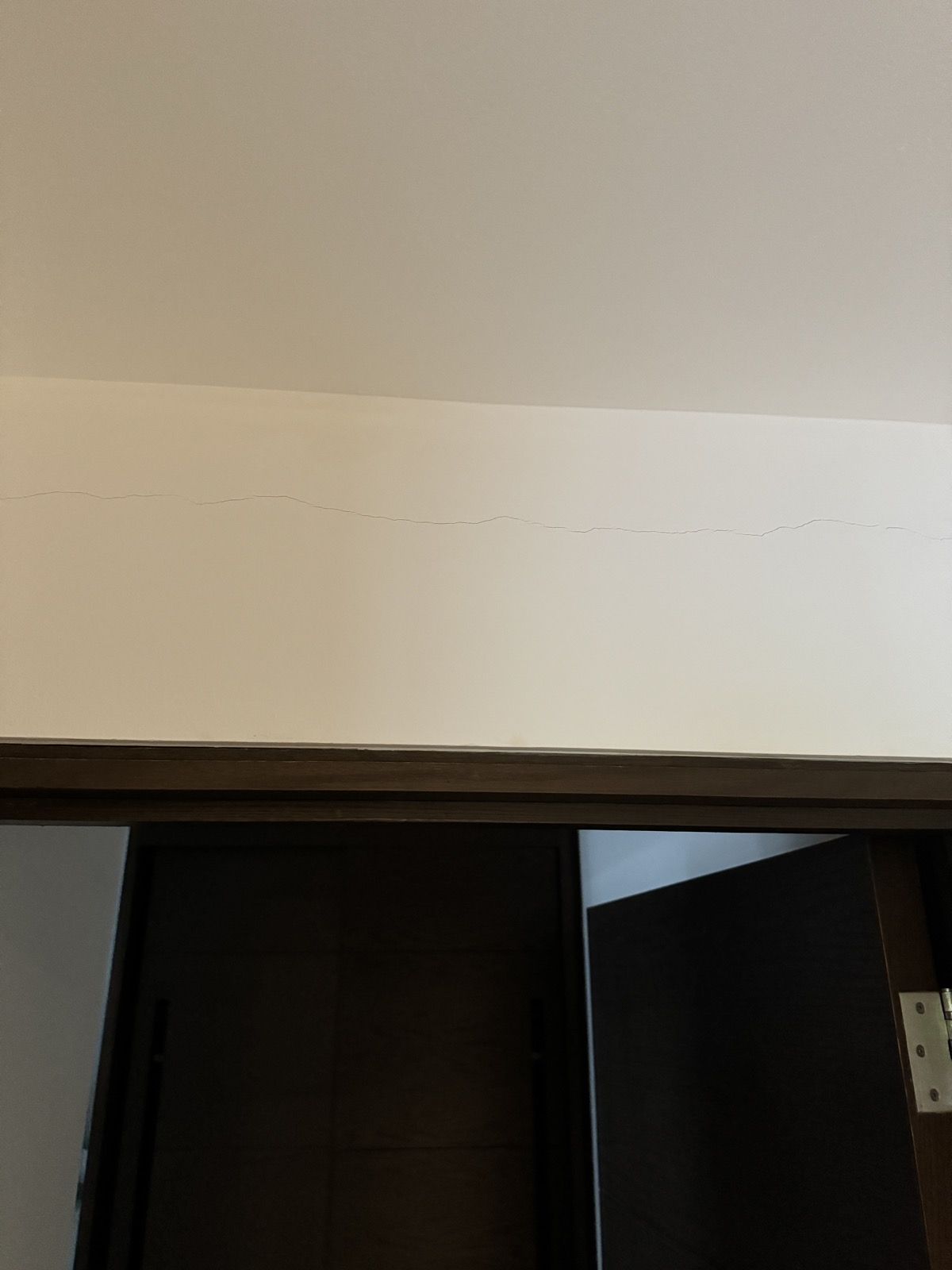
You’ll see plenty of concrete and block construction here. In that kind of home, a thin, fairly straight hairline crack in the plaster or finish can come from ordinary settling, or from the finish shrinking as it dries in a humid climate. That kind of mark is often cosmetic, but I wouldn’t decide that from a photo or a quick glance.
What I’d be more concerned about is a crack that is wider, one the seller says has been growing, a stepped crack that follows the block or tile lines, or a diagonal crack. I’d also pay attention to cracks right at windows, door frames or where something passes through the wall, because those can be a path for water or a sign of movement. A long hairline above a door, like the one in the photo, is something I’d still point out to the inspector, and I’d ask the seller whether they’ve noticed it changing.
Air conditioners and the wall around them
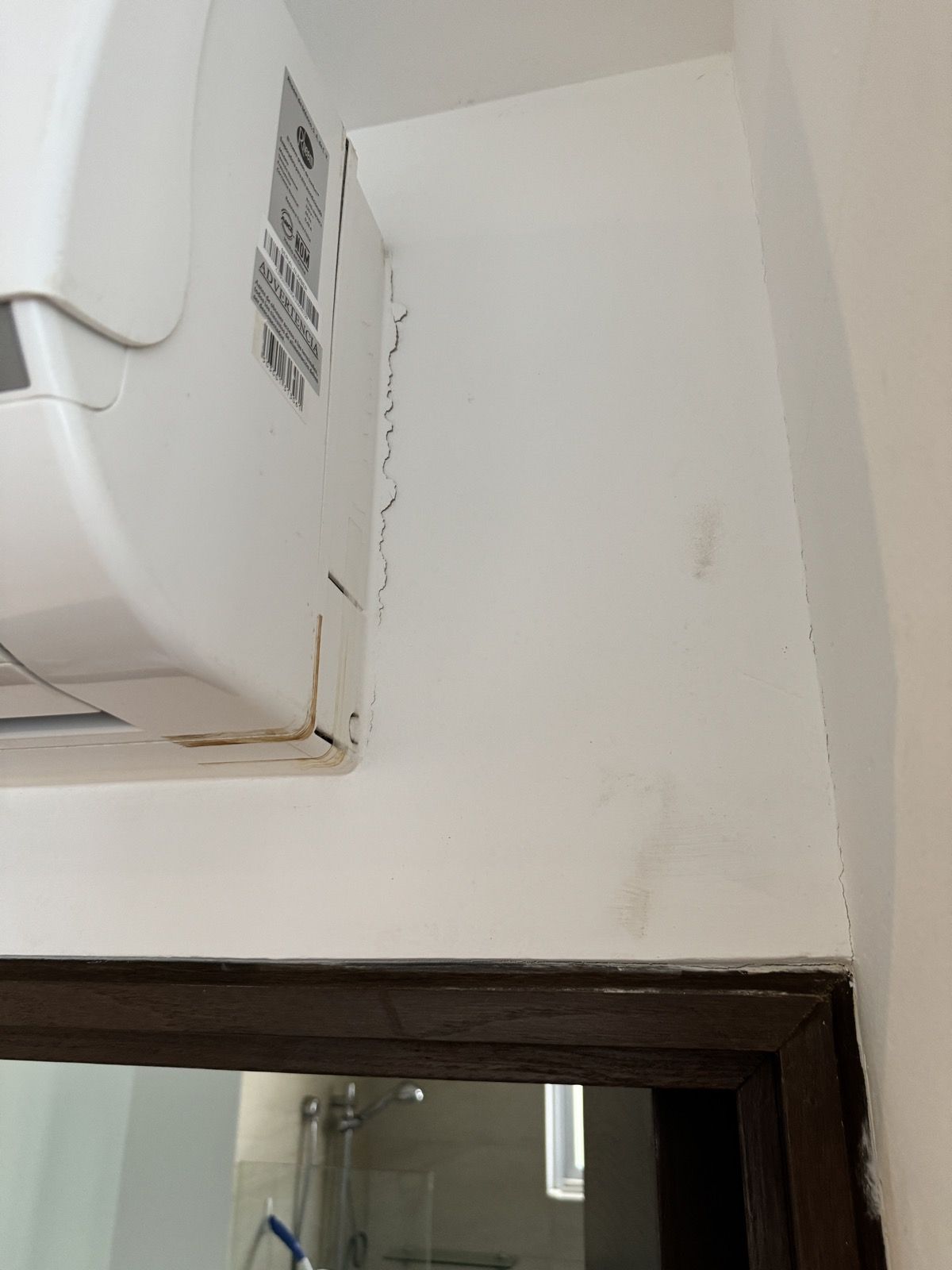
On a walkthrough, I’d ask when the air conditioners were last serviced. I’d also look at the unit itself and the wall around it. Rust or brown discoloration on the casing can be a sign that condensate has been leaking or sitting on the unit. A crack in the finish beside the unit, or around the opening where the lines go through the wall, is worth a closer look, because that penetration is a place water can get in.
None of that, on its own, tells you whether the unit needs a service, a repair or a replacement. It tells you what to ask. Has it been leaking? When was it last serviced? Then I’d want the inspector to run the unit, check the drainage and look at the seal around the wall penetration.
A stain, a hairline crack or a bit of rust is not automatically a dealbreaker. Each one is a question for the seller and a reason to have an inspector look more closely. Once the report comes in, we can talk about which findings actually change your decision.
With a condo, ask where your responsibility ends
A buyer can walk through every room and still miss a cost that matters. Take that roof above the top-floor unit. Who maintains it? Has the work already been paid for? Is the owners’ association discussing another assessment?
I’d ask the administrator for the relevant meeting minutes and any approved or proposed assessment. I’d ask the inspector whether they’ll have access to the roof. Those are two different calls, and both answers matter. Even a thorough inspection of the unit will tell you very little about what the owners voted to spend last month.
What if the seller says it’s being sold as-is?
I’d ask two questions up front. Will the seller give your inspector access, and what can you do under the agreement if the inspection turns up something significant? Have your closing attorney put the agreed inspection window and your options in writing. If you’re counting on being able to withdraw and recover a deposit, get that settled before you commit funds.
Once the report comes in, I’d go through it with you and ask which findings actually change your decision. A tired air conditioner might be something you’re happy to replace. Water coming in around several windows is a different conversation. Get a local quote for the work you’re considering. Then we can decide what you’re comfortable offering or ask the seller to address a specific item.
What about a brand-new condo?
I’d arrange a walkthrough before accepting delivery, with the water and electricity on. Run the shower, see where the water drains, open the terrace doors, and run each air conditioner. Ask whether you can bring an independent inspector. For anything the developer agrees to correct, make a dated list with photos, name the person responsible and agree on when you can come back to check the work.
If you’ve found a place you like, send me the listing and tell me what caught your eye or gave you pause. We can work out what to ask on the next visit and where an inspection fits into your offer. Buying a home with Mexico Real Estate Solutions